

Blog
The Resilience Coefficient: A 20-Year Engineering Journey from the Congo to the Capital

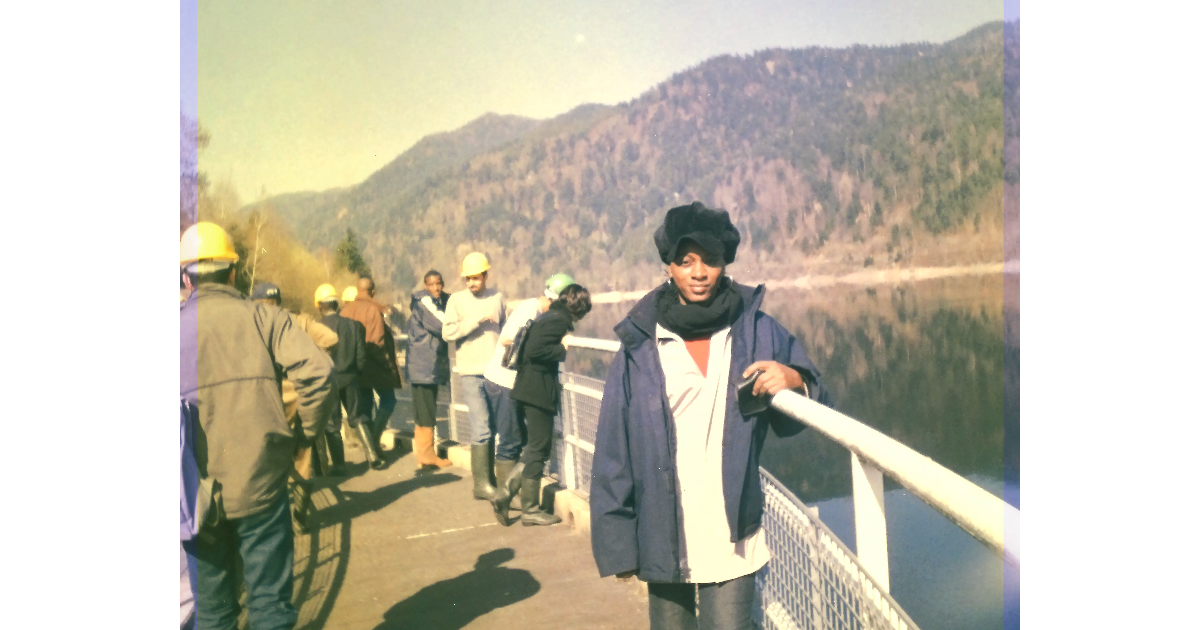
They told me the path would be straight. It wasn’t. In 2005, I won the Diversity Visa Lottery and arrived in the US with two suitcases, $400, and a dream. Today, I am a Principal Consultant managing multi-million dollar infrastructure projects. I call this journey “The Resilience Coefficient.”
Click here to watch the 6-minute visual summary on YouTube, or scroll down to read the full story below. 👇
How applying the laws of physics to construction schedules mirrors a life of adaptation, from Mossendjo to a U.S. Ph.D.
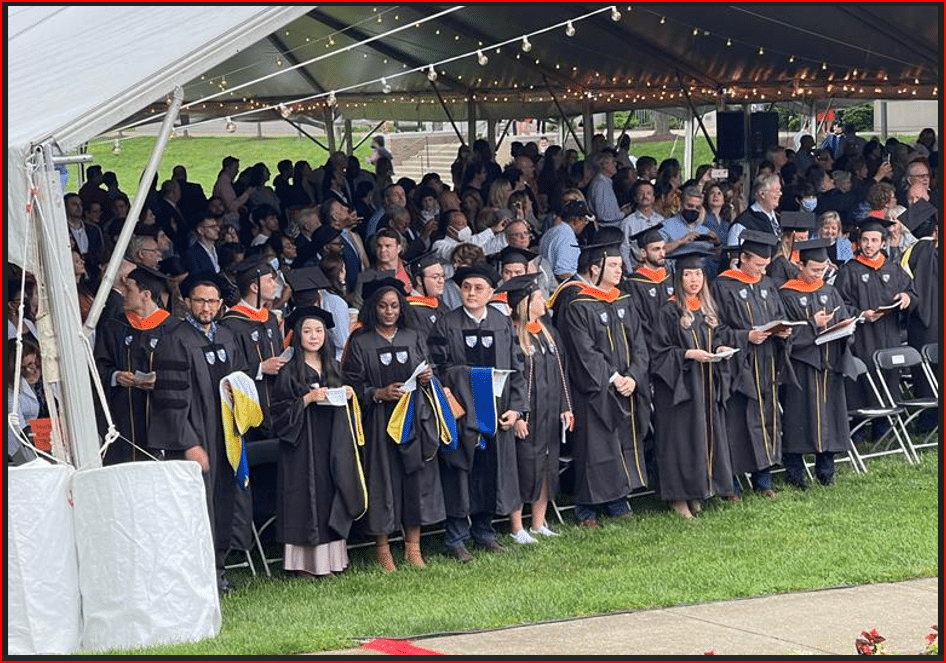
Graduation Ceremony – Class of 2022 – School of Engineering CUA, Washington, DC
In my doctoral dissertation at The Catholic University of America (CUA), I used the laws of physics through Random Matrix Theory and the Tracy-Widom distribution to study how large construction schedules can survive chaos. The goal was to mathematically model “resilience” in complex construction schedules. How does a system survive chaos? How does it absorb shock and recover its form?
I spent years researching this “Universal Law,” but I have spent a lifetime living it.
I have never been one for small talk. I am an unconventional spirit—a mathematician at heart who finds comfort in the logic of blueprints and the hum of computer labs. My journey to becoming a Principal Consultant at AI&GB Consulting and a Ph.D. Civil Engineer did not follow a straight line. It spanned three continents, three languages, three dialects, and two decades of relentless technical evolution. This is the story of that journey.
The Foundation: From Mossendjo to the “African Ivy League”
My story began on July 8, 1972, in Mossendjo, Republic of the Congo, also known as Congo-Brazzaville.
My roots are deeply planted in the suburb of Madouma, where my maternal grandparents lived near the historic Swedish mission station established in 1929. My childhood was defined by movement, changing schools often, which taught me early on how to adapt to new environments quickly.
My technical foundation was laid at the Lycée Technique Poaty Bernard in Pointe-Noire. I pursued the rigorous Baccalauréat “Série E” majoring in Mathematics and Technology. I was often the only girl in my class from 10th to 12th grade, but I didn’t mind. While others socialized, I spent my summers solving math problems and tutoring my peers.
I mastered core technical disciplines like Industrial Drawing (Dessin Industriel) and Workshop (Atelier), learning the language of blueprints and fabrication before I even entered university. It was here that I also discovered a love for languages, adding Russian to my repertoire alongside French and English.
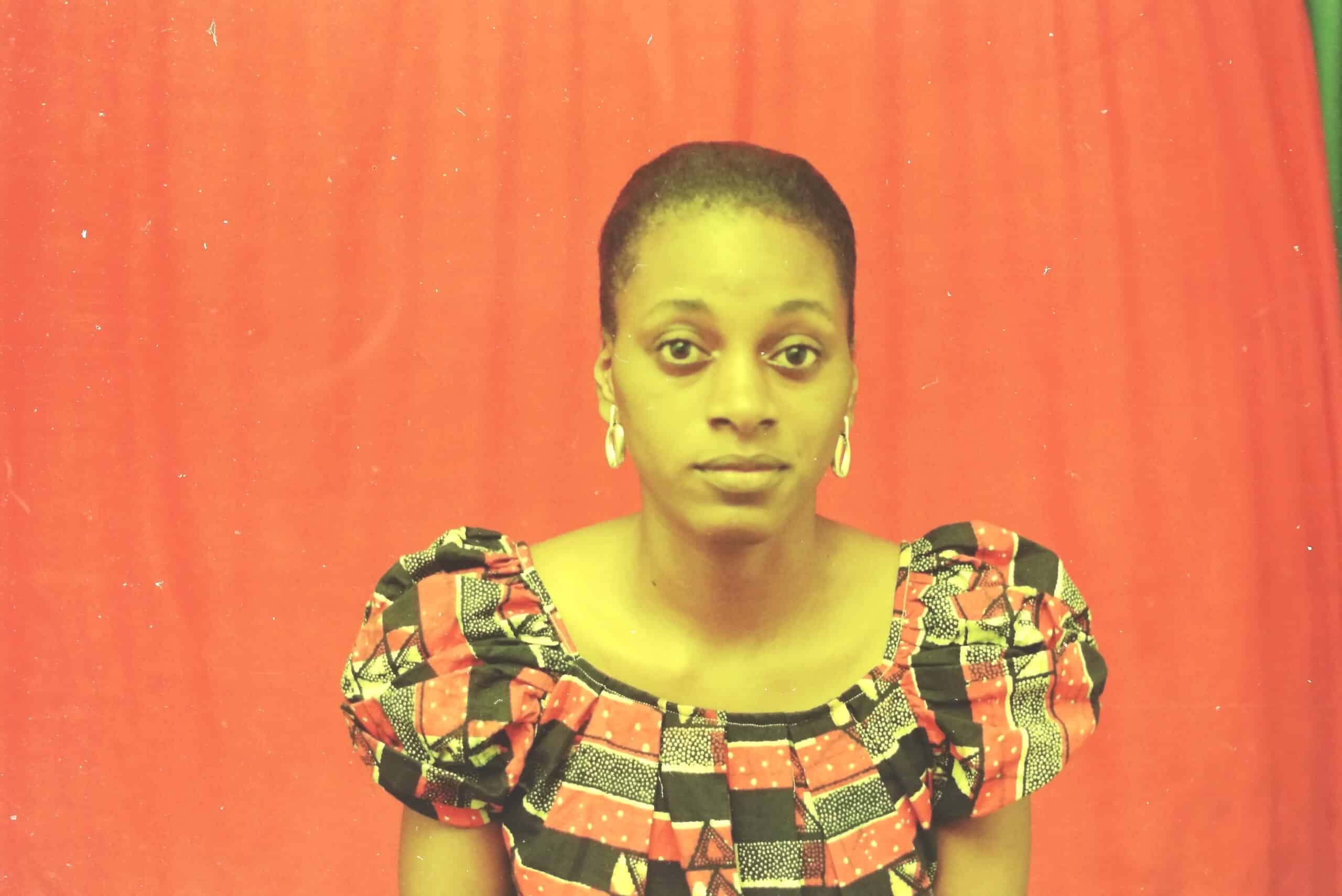
My student ID Card’s photo (1991): Building the foundations in mathematics andphysics in the Republic of the Congo
I continued my studies in Math and Physics at Marien Ngouabi University in Brazzaville (1991-1993). However, life—like engineering—is subject to external forces. The civil war, which erupted in November 1993 and lasted through December 1999, upended everything.
Recognizing the need to preserve its future scientists, the government implemented a program to send science students to West Africa. Because I held an associate degree in mathematics and physics, I was selected.
Displaced but determined, I relocated to Burkina Faso. There, I earned a Master’s degree in Mathematics from the Université Joseph Ki-Zerbo (formerly the University of Ouagadougou). Seeking to advance my mathematical education further, I began a DEA (Diplôme d’Études Approfondies) while actively pursuing international opportunities.
My academic potential was recognized when I was accepted into the prestigious D.E.S.S. d’Ingénierie Mathématique at the Université de Savoie in France. But when funding for foreign education was cut, I faced a critical juncture: give up or pivot.
I chose to pivot. I sat for the competitive entrance exam for EIER (École Inter-États d’Ingénieurs de l’Équipement Rural, now 2iE), one of Africa’s most prestigious engineering institutes. I secured a full scholarship, shifting my focus from pure mathematics to Civil and Environmental Engineering.
As a requirement of this rigorous program, I participated in an international “Voyage d’étude” fellowship to Strasbourg, France, hosted by ENGEES (National School for Water and Environmental Engineering). I deepened my study of critical hydraulic infrastructure, including technical visits to the Gambsheim Locks and the Kruth-Wildenstein Dam.
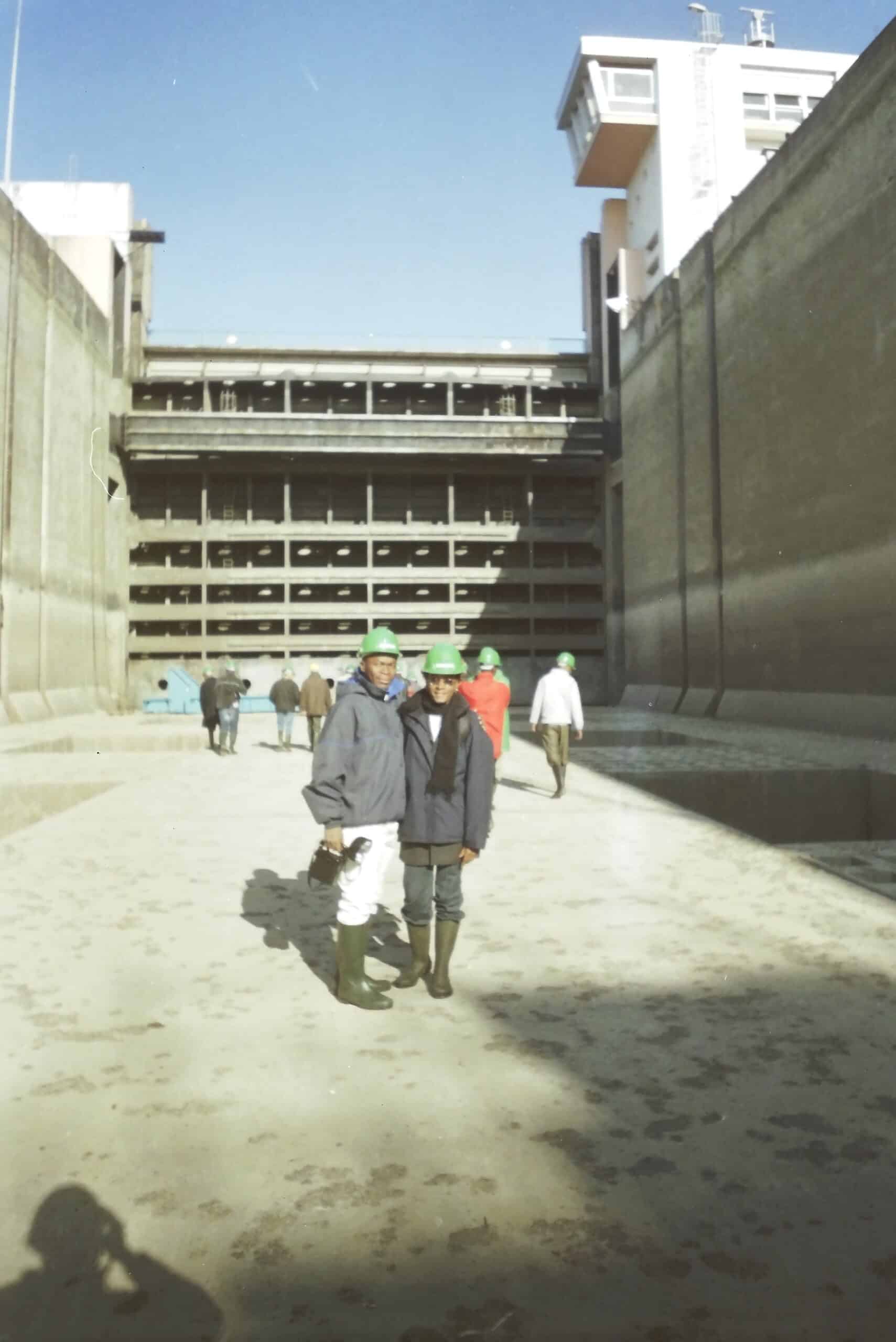
International Fellowship in Strasbourg, France (2003): Hydraulic infrastructure technical visits. Posing here with a classmate.
Fieldwork in the Sahel: The “Rice Plan of Action”
Before I ever set foot in the United States, I was already an engineer in the field.
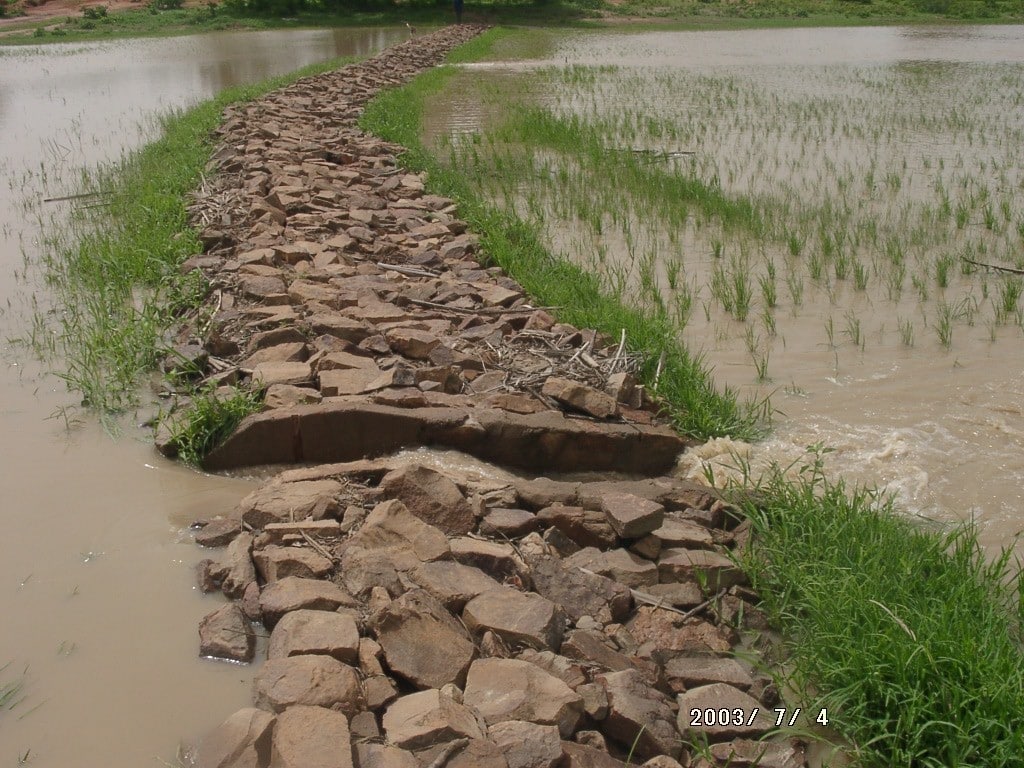
Field engineering in Burkina Faso (2003): Implementing the Rice Plan of Action (PAFR)
As a Junior Engineer at the Cellule de Formation Professionnelle à l’Ingénierie (CFPI) in Ouagadougou (2003–2005), I worked on critical infrastructure for the Rice Plan of Action (PAFR). This was not an office job. I traveled across the entire country, collaborating with regional technicians from the Agriculture and Hydraulic ministries.
We didn’t just design on paper, we executed. I assisted local populations in developing lowlands for rice cultivation and in designing and implementing hydraulic structures to manage water resources in the Sahelian climate.
My thesis work, “Contribution à l’amélioration du cadre de vie à Ouagadougou“, is archived at the 2iE documentation center, and I contributed technically to “Guide 16” (Méthodes d’aménagement des bas-fonds soudano-sahéliens), a technical manual for developing sustainable infrastructure in the region.
This period taught me that engineering is fundamentally about solving human problems.
The Reset: The Diversity Visa and the American Dream
In 2005, destiny intervened. A coworker submitted my name for the Diversity Immigrant Visa (DV) Program, also known as the “Green Card Lottery.” I never planned to move to the U.S., but out of millions of applicants worldwide, I was selected.
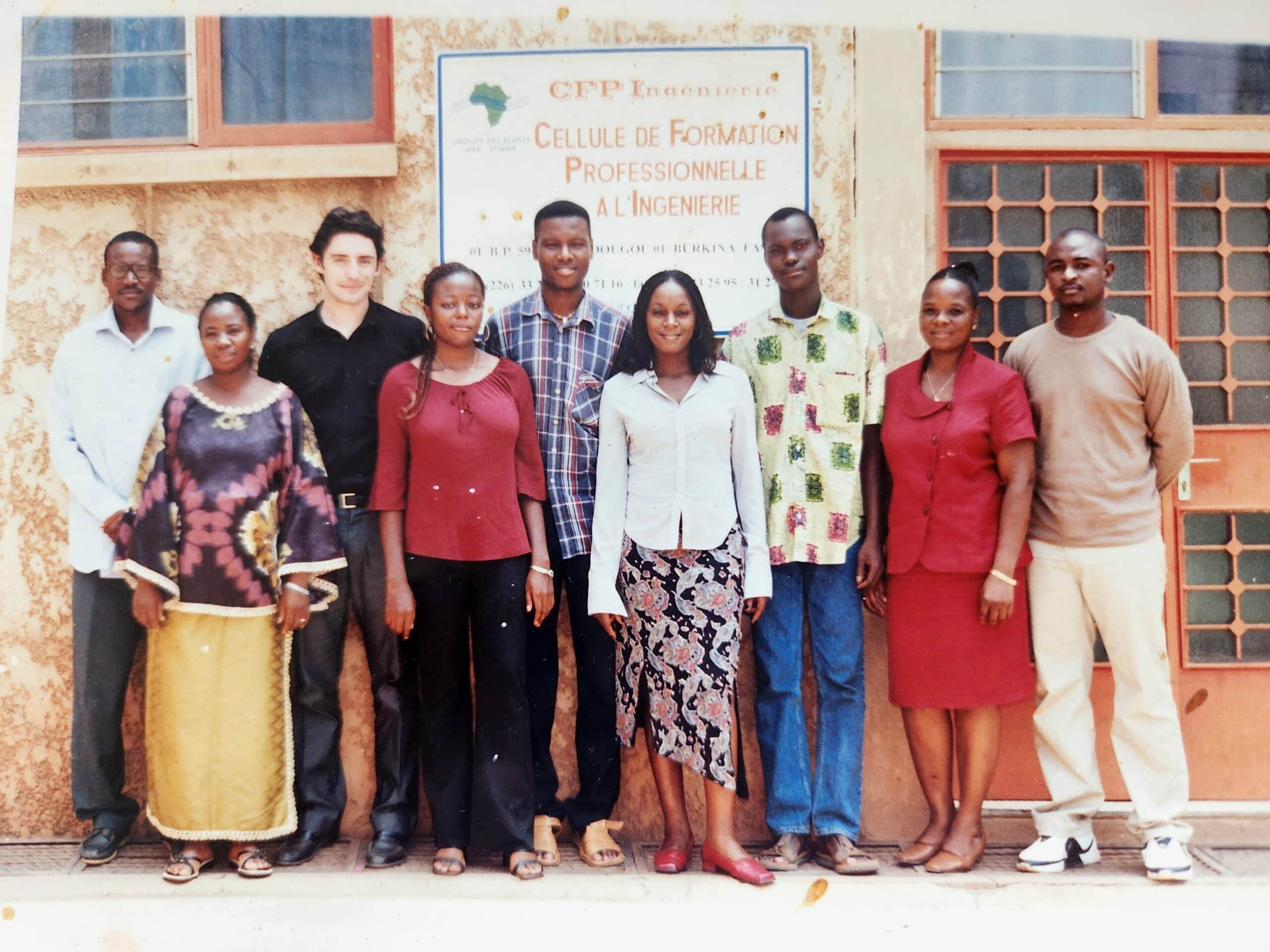
The CFPI Engineering Team (2005). Standing with the colleagues who shaped my early career,including the friend who submitted my name for the U.S. Diversity Visa Program.
In January 2006, I arrived in the United States with a Green Card, two suitcases, and $400.
Despite my WES-accredited degrees and years of field experience, the U.S. job market was a closed door. I applied for engineering roles but was repeatedly turned down. But resilience is about adaptation.
To support myself, I worked night shifts as a mail handler at the U.S. Postal Service in Gaithersburg, Maryland (2006–2008). By day, I attended Montgomery College, taking English as a Second Language courses—from basic to advanced—to ensure I could compete at the graduate level.
My breakthrough came when Steel Products, Inc. gave me a chance as a Project Estimator. Finally, I was back in the industry.
The Academic Marathon: M.S. and Ph.D.
In 2005, destiny intervened. A coworker submitted my name for the Diversity Immigrant Visa (DV) Program, also known as the “Green Card Lottery.” I never planned to move to the U.S., but out of millions of applicants worldwide, I was selected.
While working full-time in the U.S. construction industry, I enrolled at The Catholic University of America (CUA).
2012: I earned my M.S. in Civil Engineering, balancing my studies with my work as a Graduate Teaching Assistant and grant coordinator for the CUA Sponsored Accounting Department. My research focused on “An Evaluation of Cost Indices Used in the U.S. Construction Industry.”
The Ph.D. Challenge: My doctoral journey began in Soil Mechanics under Professor Poul V. Lade, a renowned figure in Geotechnical Engineering. When he transferred to another university, I had advanced far into my dissertation on soil simulations. I was given a choice: follow him and restart my coursework elsewhere, or stay at the CUA and start a new topic from scratch.
I stayed. I found a new advisor, Professor Gunnar Lucko, F.ASCE, Director of the SPEED Lab. Together, we undertook a risky, innovative topic: applying advanced mathematical physics to construction scheduling. As Professor Lucko noted, this research was designed to “deepen our understanding of the most important tool that project managers use daily.”
This was a grueling test of endurance. While working full-time jobs across the country—supporting U.S. Army Corps of Engineers projects in California and managing Department of Veterans Affairs healthcare infrastructure in Connecticut—I was simultaneously running complex simulations. I remotely managed a network of 20 CUA lab computers, monitoring MATLAB routines overnight to process the massive datasets required for my research.
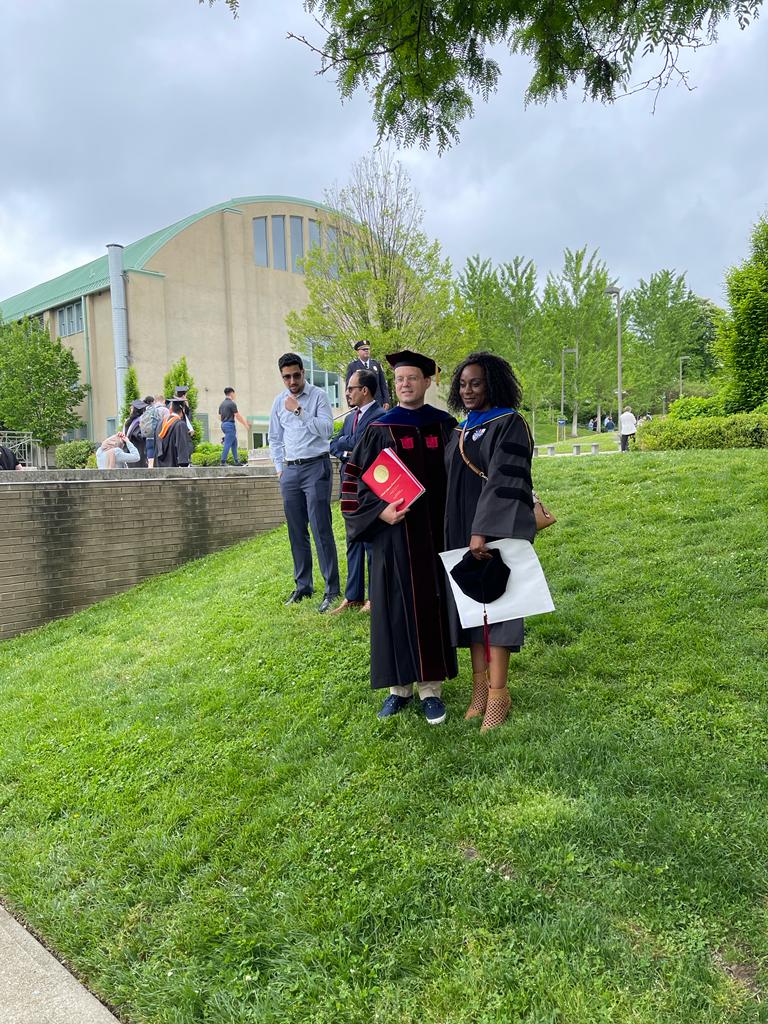
Celebrating the Ph.D. defense and graduation with my mentor, Gunnar Lucko, Ph.D., F.ASCE.
In 2022, I successfully defended my dissertation: “New Universal Law: Application of Tracy-Widom Theory for Construction Network Schedule Resilience.”
Note on Access: My dissertation is formally archived at the CUA University Libraries. It is also registered with the United States Copyright Office (Reg. No. TX 9-212-966), protecting the intellectual property of this “Universal Law” as we prepare for future publication.
The Resilience Coefficient: Recognition of Excellence
My commitment to engineering excellence has been recognized by both the industry and academia.
- Professional Performance: My dedication translates directly to the workplace. My performance evaluations at the U.S. Army Corps of Engineers (where I supported Civil Works projects in California, including the Riverside Levee Rehabilitation) and the Department of Veterans Affairs (where I managed or co-managed critical healthcare infrastructure like the Expand Primary Care Clinic project in Connecticut) have consistently highlighted my dedication and technical capability, with my most recent VA appraisal rating my performance as “Outstanding.”
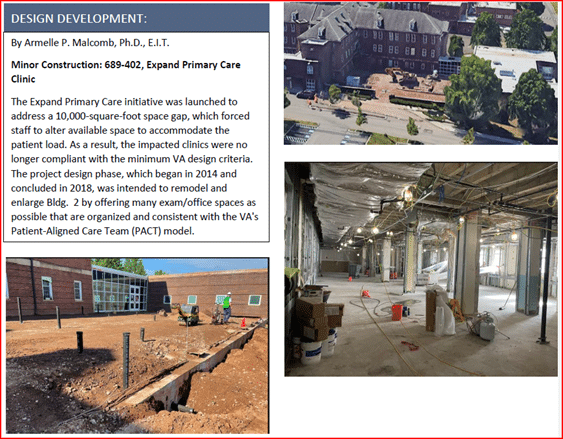
Managing Critical healthcare infrastructure for the Department of Veterans Affairs, CT (2023).
- Featured Achievement: In 2021, I was selected to participate in the prestigious Dissertation Institute, funded by the National Science Foundation. This achievement was highlighted in the CUA School of Engineering’s Fall 2022 magazine, recognizing my work on the “New Universal Law.”
- Academic Honors: My research potential was backed by the Construction Management Association of America (CMAA) National Capital Chapter Scholarship, an award I was proud to accept at the annual banquet alongside Professor Lucko. I was also a recipient of the Clark Construction Group Scholarship (2018) and the Joseph Corasaniti Endowed Scholarship (2018–2020). Additionally, in 2012, I was invited as a Guest Speaker at the Association for the Advancement of Cost Engineering International (AACEI) in Washington, D.C., to present the findings of my Master’s degree research.
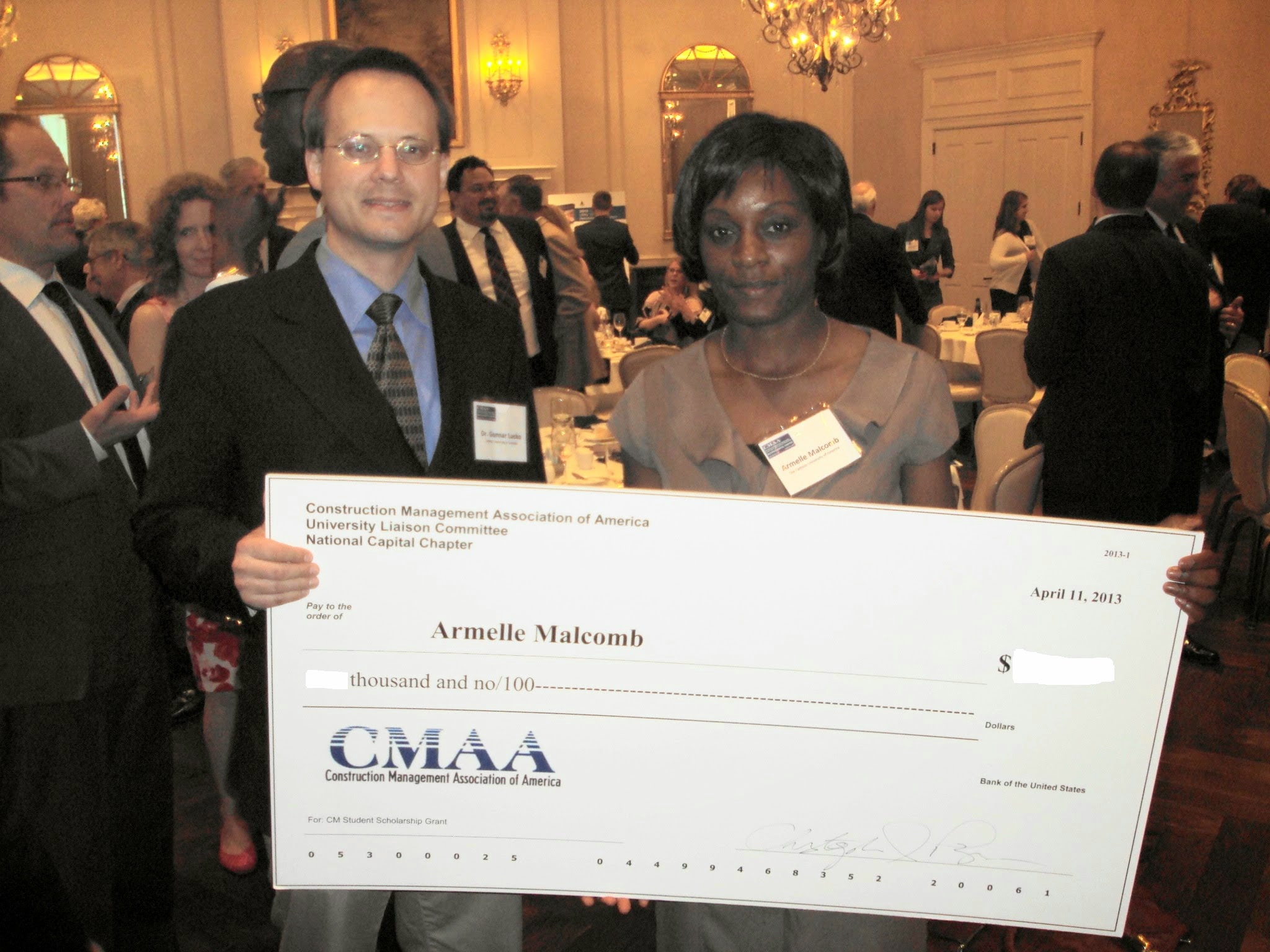
CMAA Check Presentation: Honored to receive industry recognition alongside my mentor, Professor Gunnar Lucko, F.ASCE.
- Industry Leadership: While serving as a Team Leader at the Maryland Department of Transportation State Highway Administration (MDOT SHA), I was honored to receive the Customer Service Promise Award (2017) for delivering quality jobs with diligence and responsiveness.
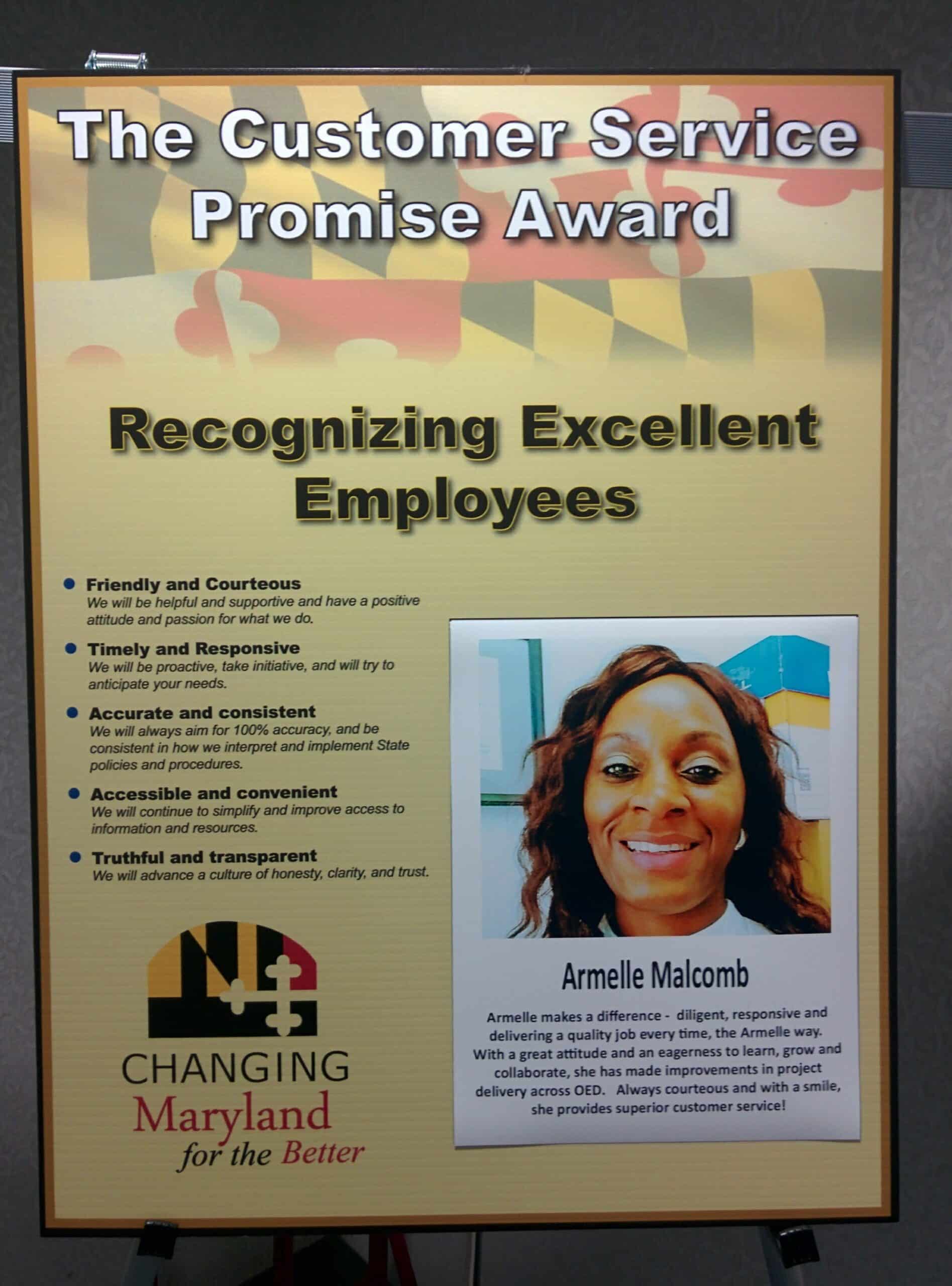
MDOT SHA: Customer Service Promise Award, A Radiant Recipient (2017)
- Professional Affiliation: I have been an active member of the American Society of Civil Engineers (ASCE) since 2010, holding the M.ASCE designation.
The Result: A Vision for Humanity
My mother was a nurse. She spent her life caring for patients, not for money, but out of a deep love for humanity. Her example taught me that our work must serve a purpose greater than ourselves.
Today, as the founder of AI&GB Consulting, I apply that same ethos to Project Management and Engineering. Whether we are optimizing complex workflows through data analysis, managing the construction of a skyscraper, or bridging cultures through translation, the goal is the same: to solve human problems by accepting, uplifting, and empowering each other.
I offer my industry a unique value proposition: I combine the theoretical depth of a U.S. Ph.D. with the practical grit of a field engineer who has navigated civil wars, immigration systems, and language barriers.
I no longer need to prove my self-worth. My journey speaks for itself. I am here to build, to solve, and to serve. I bridge cultures not just through English and French, but through Lingala, Kikongo, Tsangui, and even Russian.
To my future partners: Let’s build something that lasts. I am open to opportunities globally—from the DMV to Dubai, from Paris to Pretoria.
READY TO BUILD RESILIENCE INTO YOUR NEXT PROJECT?
📫 Contact Dr. Malcomb directly at armelle@aietgb.com
🤝Or connect on LinkedIn to continue the conversation.